 Ultimate guide
How to Explore Christmas Mythology With Your Kids
Last Updated: November 14, 2026
Quick Summary
Christmas mythology is the body of stories, legends, and folk beliefs that grew up around the holiday over centuries, separate from its religious core. It splits into three family trees: stories about real people like St. Nicholas, invented creatures like Krampus, and plants and light like the evergreen tree. Teaching kids to sort these into history, belief, and legend turns the holiday into solvable puzzles.
- St. Nicholas served as a bishop in Myra, in what is now Turkey, during the fourth century.
- Dutch families brought Sinterklaas to North America, and English speakers reshaped the name into Santa Claus.
- Krampus is a horned figure from Alpine folklore who traditionally accompanied St. Nicholas.
- Evergreens became Christmas symbols because they stay alive when everything else dies in winter.
- Have kids sort facts into three piles: history, belief, and legend.
Table of Contents
- Why Christmas Mythology Captivates Kids
- Christmas Folklore and Traditions: A Family Origin Guide
- The Christmas Tree, Wreath, and Evergreen Symbols
- 10 Interesting Facts About Christmas for Kids
- Separating History, Belief, and Legend for Young Listeners
- Family and Classroom Activities That Bring the Myths to Life
- Start Your Family's Christmas Mythology Adventure
- Frequently Asked Questions
Why Christmas Mythology Captivates Kids
The mythology of Christmas traditions for kids works because it answers a question children ask constantly: where did all of this come from?
Christmas mythology is the body of stories, legends, and folk beliefs that grew up around the holiday over centuries, separate from its religious core. Some of it traces to real people. Some of it traces to winter festivals older than Christianity.
That mix is exactly what makes it teachable.
Christmas Folklore and Traditions: A Family Origin Guide
Christmas folklore and traditions split into three rough family trees: stories about real people, stories about invented creatures, and stories about plants and light. Once kids see those three branches, the whole holiday stops looking like one big mystery and starts looking like a collection of puzzles they can solve.
The trick is order. Start with the real man, move to the monsters, then finish with the tree. Each one builds on the last, and each one gives you a natural place to pause and ask what your child thinks.
St. Nicholas, the Real Man Behind the Myth
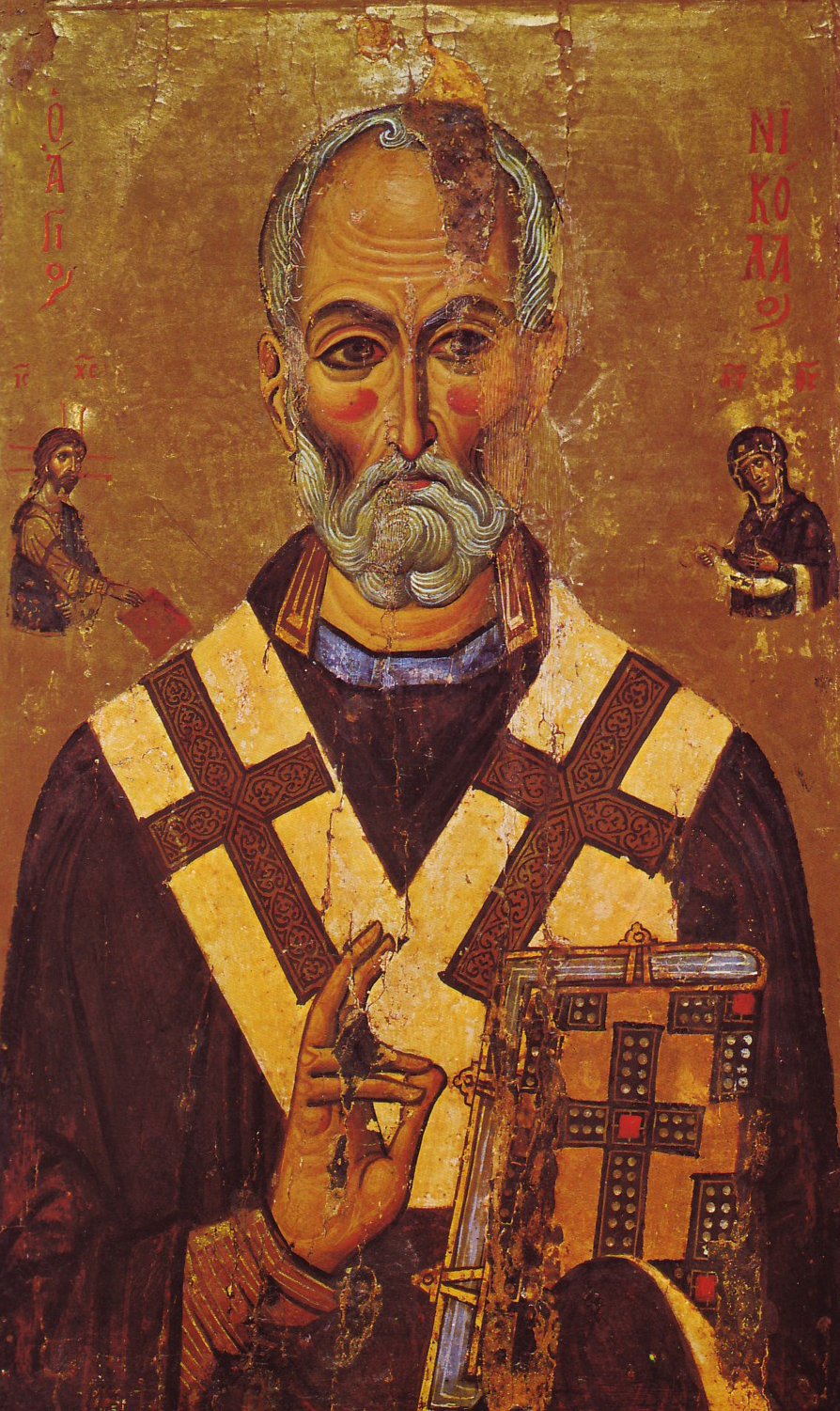
Every Santa story starts with a bishop. St. Nicholas served in Myra, in what is now Turkey, during the fourth century, and the legends attached to him center on secret gift-giving, especially to children and to families in financial trouble.
Sailors carried his story across Europe. Dutch families brought their version, Sinterklaas, to North America. English speakers mangled the name into Santa Claus.
For kids, the useful takeaway is this: Santa is not a lie invented to sell toys. He is a real person's reputation, stretched and decorated over hundreds of years. For the fuller story, our own history of Saint Nicholas digs into the sources behind the legend.
Krampus and Other Christmas Creatures
Not every Christmas creature is friendly, and that is precisely why children remember them. Krampus, a horned figure from Alpine folklore, traditionally accompanied St. Nicholas and served as the warning half of the pair.
Other traditions have their own versions. Icelandic folklore gives us the Yule Cat, a creature said to stalk people who never received new clothes before Christmas.
Here is where parents should be deliberate. If your kids want more of the friendly side of the North Pole, our Santa questions for kids covers the elves, the reindeer, and village life in kid-sized answers.
The Christmas Tree, Wreath, and Evergreen Symbols
Evergreens became Christmas symbols for a practical reason: they are the plants that stay alive when everything else dies. Cultures across northern Europe hung evergreen boughs in midwinter long before Christmas existed, treating the green as a sign that the season would turn. Ancient Romans decorated with greenery during Saturnalia, and Norse and Celtic households did something similar at their own winter festivals. The meaning was similar across all of them, life persisting through the dark.
What the stories say about the first tree
One popular legend credits an eighth-century missionary, Boniface, with pointing to a fir tree as a symbol of enduring life after cutting down a sacred oak. Historians treat that story as legend rather than documented fact, and it is a good example for kids of how a tradition can grow around a real person.
The indoor tree as most families know it went mainstream in Britain after Queen Victoria's husband, Prince Albert, a German, popularized the custom at court. A widely reprinted illustration of the royal family beside a decorated tree in the 1840s helped turn it into a fashion across Britain and North America.
Wreaths, garlands, and the circle idea
Wreaths and garlands came along the same evergreen route. The circular wreath shape carried a second layer of meaning, a circle with no end, which early Christian communities used to point to eternal life.
Ask your kids a simple question when you decorate this year: why a tree and not a flower? The answer, that evergreens survive winter, is something a five-year-old can understand and will remember.
10 Interesting Facts About Christmas for Kids
Here are ten facts worth sharing at the dinner table, each one short enough for a child to repeat to a grandparent. We have added a small note after each one so you can tell your kids which parts are documented history, which are religious belief, and which are legend. That three-way split is the angle most holiday articles skip, and it is the one that turns a list of facts into a lesson.
- St. Nicholas was a real bishop who lived in the fourth century. History. He served in Myra, in what is now Turkey, and the legends about secret gift-giving grew up around a real person.
- The name Santa Claus comes from the Dutch Sinterklaas. History of language. Dutch families brought the name to North America, and English speakers reshaped it.
- Christmas was not always celebrated on December 25. History. Early Christian communities marked the holiday on different dates, and December 25 became the common date over time.
- Evergreen trees were decorated in winter long before Christmas. History. Roman, Norse, and Celtic households all used greenery at midwinter.
- Krampus comes from Alpine folklore, not from any ancient Christmas text. Legend. The horned figure is a regional folk character, and telling it as folklore keeps it fun rather than frightening.
- The Yule Cat is an Icelandic creature from Christmas folklore. Legend. The story warned people to finish their winter wool work, and it is a good example of a tale with a practical purpose.
- Carols were once sung door to door by traveling singers. History. The word carol originally referred to a dance song, and the door-to-door custom grew from there.
- Mistletoe was considered sacred by ancient cultures before it became a kissing tradition. History and legend mixed. The plant had religious meaning long before the modern game.
- The modern image of Santa took shape in nineteenth-century illustrations. History. Writers and illustrators, not a single inventor, built the red suit and sleigh over decades.
- Different countries celebrate with completely different characters and foods. History and culture. Italy has La Befana, Sweden has St. Lucia, and Mexico has Las Posadas, to name a few.
Turn the list into a game
A list is a starting point, not a lesson. Try these three quick activities with the facts above:
- Sort the facts. Write each fact on a card and have kids sort them into three piles: history, belief, and legend. There is no single right answer for every card, and the discussion is the point.
- Fact-or-fiction quiz. Read a fact aloud and ask your child to say whether it is documented, believed, or legendary. This works well as a car ride game.
- Add a fact. Have each child research one Christmas tradition from a country you have not covered and add it to the list as fact eleven.
Once your kids have these down, put them to the test with our free Christmas trivia game. It is a fact-or-fiction challenge built for exactly this kind of family competition, and it costs nothing. You can also print our free coloring book pages for younger kids while older siblings run the quiz.
Watch out: some widely shared "facts" online, such as specific claims about the exact year of the first Christmas tree, are disputed by historians, so teach kids to ask "how do we know?" before repeating a claim.
Separating History, Belief, and Legend for Young Listeners
Children can handle nuance earlier than adults expect, as long as you give it to them in plain language.
History is what we can check against records and evidence. A bishop named Nicholas existed. Evergreen plants were used in winter festivals. Those are historical.
Belief is what a family holds as true about the religious meaning of Christmas. That belongs to your family and your faith, and no article should decide it for you.
Legend is the storytelling layer, the flying reindeer, the workshop, the creatures. Legends are not lies. They are stories a culture built to carry a feeling forward.
When a child asks whether Santa is real, the honest answer lives in that third bucket, and it is one you get to shape. If you want help finding the words, our guidance for parents and families covers these conversations in more detail.
Family and Classroom Activities That Bring the Myths to Life
The fastest way to make folklore stick is to have kids handle it. A story they hear fades. A story they draw, act out, or quiz each other on stays.
Try these in a classroom or at the kitchen table:
- Timeline building. Give kids cards for St. Nicholas, Sinterklaas, Santa Claus, and the Christmas tree, then have them arrange the order.
- Creature research. Assign each child one folklore creature and have them present it as a "fact file," noting what country it comes from.
- Trivia rounds. Split into teams and run a fact-or-fiction quiz, which works well as a Friday afternoon activity.
- Coloring and storytelling. Younger kids color while an older sibling or adult reads the story aloud.
Our free Christmas downloads include wish lists, Nice List certificates, thank-you letters, and coloring pages you can print at home or in class. Everything on christopherkringle.com is free for parents, including games, music, videos, and printable coloring book pages for younger kids.
Start Your Family's Christmas Mythology Adventure
Christopher Kringle does not charge for its services. Christopher Kringle charges only for books, and those charges cover printing costs, editorial fees, and professional services.
The story we tell draws on real history, real people, and real world events, and it is meant to teach the magic of Christmas.
Get started with Christopher Kringle and give your kids a Christmas story they can trace all the way back to a real bishop in a real town.
Your kids will ask where Santa came from this year. You can answer with a shrug, or you can hand them a story with real history underneath it.
Frequently Asked Questions
What are some mythical creatures associated with Christmas?
Beyond Santa Claus, Christmas folklore includes Krampus, a horned figure from Alpine tradition who serves as a counterpart to St. Nicholas, and La Befana, an Italian witch who delivers gifts on Epiphany. Scandinavian folklore adds the tomte, a small guardian spirit of the farmstead. These creatures give families a way to talk about how different cultures imagined reward, kindness, and consequence during the holiday season.
Where did Santa Claus come from?
Santa Claus traces back to St. Nicholas, a bishop in Asia Minor known for secret gift-giving. Dutch settlers brought the tradition of Sinterklaas to North America, where it blended with British Father Christmas and winter folklore. At Christopher Kringle, we explore how these real people and real world events shaped the modern Santa story, and families can follow the full saga through the free resources at christopherkringle.com.
How do I explain the difference between history and legend to young kids?
Try a simple three-part frame: what we know happened, what people believed, and what stories grew from both. For example, St. Nicholas was a real bishop, people told stories about his kindness, and those stories grew into the Santa legend. This approach lets children enjoy the magic while learning that traditions evolve over time and across cultures.
What are some good Christmas traditions for children that teach something?
Try a tradition-by-tradition origin night where each week your family learns the story behind one symbol, like the tree, the wreath, or the carol. Add a trivia game from christopherkringle.com, print free coloring pages for younger kids, and let older children call or email Santa with questions. These activities combine storytelling, history, and hands-on fun without adding cost or screen-time pressure.