 blog
Best Books About Santa Claus for Kids and Families
Table of Contents
- Why Santa Claus Books Still Matter for Families
- Best Santa Claus Books for Kids: Picture Books and Read-Alouds
- Classic Santa Claus Books That Have Stood the Test of Time
- Books About the History of Santa Claus for Curious Readers
- Educational Christmas Stories for Kids: Learning Through Storytelling
- How to Choose the Right Santa Book for Your Child's Age
- Building a Family Reading Tradition Around Santa
- Conclusion
- Frequently Asked Questions
Last Updated: October 12, 2026
Why Santa Claus Books Still Matter for Families
Ask any parent what they remember about December, and it's rarely the gifts. It's the story. The same worn copy of a Christmas book pulled out every year, the same voice reading it, the same child tucked under an arm. Santa Claus books do something screens can't: they slow the season down and turn it into something a family shares.
This guide from Christopher Kringle covers the best Santa Claus books for kids, the classics worth keeping, and the history behind the man in red. We've grouped them by age so you can find the right fit fast. And if you want to go deeper than any single book allows, our saga of nine books explores the true origins of Santa Claus, with free games, trivia, music, and printable coloring pages on christopherkringle.com.
Here's what most parents get wrong: they buy one book and hope it becomes a tradition. Traditions need variety. A toddler wants pictures. A six-year-old wants a story with stakes. A ten-year-old wants to know whether any of it is real. One book can't do all three.
Best Santa Claus Books for Kids: Picture Books and Read-Alouds
The best Santa Claus books for kids pair simple text with pictures strong enough to hold a wiggly audience. For read-alouds, look for rhythm, repetition, and one clear moment of wonder per page.
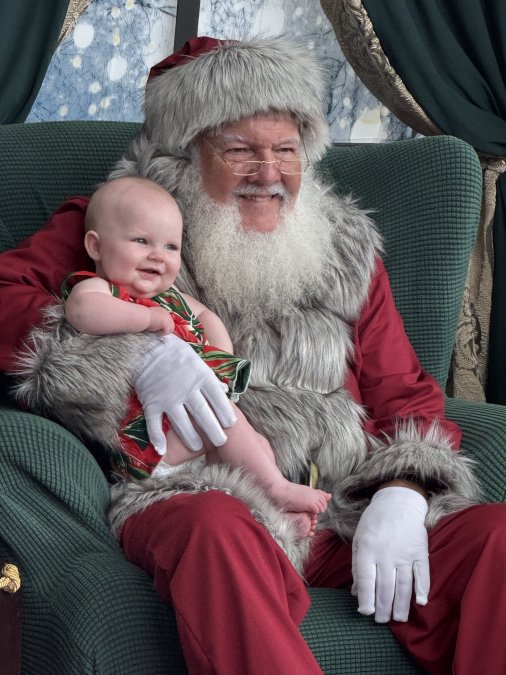
For Toddlers and Preschoolers (Ages 3-5)
At this age, the book is a prop for your voice. Keep it short, bright, and repetitive.
- Board books survive small hands and repeated readings
- Rhyming text helps toddlers predict what comes next
- Hidden details in the art give them a reason to return
- Santa's face should appear early, not on page twelve
A common mistake is choosing a book you love rather than one your child can follow. If a three-year-old can't point at something on every page, the book is too wordy.
For Early Readers (Ages 6-8)
Once kids read on their own, Santa stories become something they can own. Look for short chapters, humor, and a problem a child can solve.
- Early chapter books build reading stamina without frustration
- Funny Santa moments keep reluctant readers turning pages
- Letters to Santa formats work well because kids write their own
Classic Santa Claus Books That Have Stood the Test of Time
Classic Santa Claus books earn that label for one reason: they still work when read aloud for the twentieth time. The poems and picture books from decades past rely on rhythm and warmth rather than novelty, which is exactly why they last.
The famous Christmas Eve poem, often credited to Clement Clarke Moore, shaped how most of us picture Santa: the sleigh, the reindeer, the chimney. Whether or not Moore wrote it, the poem's influence on Christmas storytelling is hard to overstate. You can read the full text and history of the poem if you want the background before you read it to your kids.
Other classics worth owning:
- The Grinch story, for kids ready to talk about what Christmas means
- Polar Express, for the child who still wants to believe
- The night-before stories, for the youngest listeners
What most guides miss is that classics aren't automatically better. Some older books are long, slow, and full of language kids no longer use. Read any classic yourself first. If you're bored by page three, so is your child.
Books About the History of Santa Claus for Curious Readers
Books about the history of Santa Claus answer the questions kids eventually ask: Was he real? Where did the sleigh come from? Why does he come down the chimney?
The honest answer is that Santa is a blend of many traditions. A real bishop named Nicholas, known for secret gift-giving, became a saint. Dutch settlers brought their version of him to new shores. Poets and advertisers filled in the rest. For a solid overview, the history of Saint Nicholas and Santa Claus is a good starting point for parents who want the facts straight.
For curious readers, look for:
- History books that separate legend from record
- Folk tale collections explaining traditions in other countries
- Story-driven histories that follow the legend across centuries
This is where our own library fits. The Christopher Kringle saga weaves real history, hidden societies, and Christmas magic into nine books, so a ten-year-old who wants the "real" story gets one they can sink into. It grounds itself in history rather than floating off into pure fantasy.
Educational Christmas Stories for Kids: Learning Through Storytelling
Educational Christmas stories for kids work because children absorb values through characters, not lectures. A story about a greedy character who changes teaches generosity better than a hundred reminders to share.
What makes a Christmas story educational rather than just festive:
- A clear moral the child can name afterward
- A character who chooses kindness at a cost
- Real details about how Christmas is celebrated around the world
- A question worth discussing when the book closes
The last point matters most. A story that sparks one good dinner-table conversation did more than a workbook. Ask your child what they would have done in the character's place, and you've turned reading into thinking.
Parents often tell us they want holiday entertainment that isn't just sugar. That's a fair ask. Look for stories where kindness costs something, because that's where the lesson lands.
How to Choose the Right Santa Book for Your Child's Age
Choosing the right Santa book comes down to three things: reading level, attention span, and what your child currently believes. Match all three and the book gets read. Miss one and it sits on the shelf.
Use this quick guide:
| Age | What They Need | Book Type | Watch Out For |
|---|---|---|---|
| 3-5 | Pictures, rhythm, short text | Board books, rhyming tales | Long paragraphs, small art |
| 6-8 | Humor, simple chapters | Early readers, letter stories | Slow openings |
| 9-12 | Real answers, bigger stakes | History, chapter sagas | Books that feel babyish |
| Family | Shared read-aloud | Classics, illustrated editions | Anything too long for bedtime |
One more filter: ask what your child will do after the book ends. A book that leads to drawing, writing a letter, or asking questions has replay value. A book that just ends doesn't.
Building a Family Reading Tradition Around Santa
A reading tradition sticks when it's small enough to repeat. The families who keep it going for years aren't doing anything elaborate. They pick a time, a spot, and a stack of books, and they show up.
Try this simple framework:
- Pick a nightly window during December, even fifteen minutes
- Let your child choose from three or four Santa books
- Keep one special book for Christmas Eve only
- Add a small ritual, like hot cocoa or the same blanket
- Invite older kids to read to younger ones, which keeps them engaged
That last point solves a common problem. Parents with kids aged eight and ten worry the younger stories feel babyish. Handing the older child the reader's role fixes it. They get status, the younger one gets a story, and you get to listen.
For families who want more than books, christopherkringle.com offers free games and trivia, music you can download, YouTube videos, and printable coloring pages for the younger kids. You can also email Santa or set up a call, all free for parents. It's a way to keep the tradition going past the last page.
Conclusion
The hardest part of December isn't finding a Santa book. It's finding one your whole family will return to year after year, when the season gets busy and bedtime gets short. A story that fits your child's age and sparks one real conversation is worth more than a shelf of books nobody opens.
At Christopher Kringle, we built our nine-book saga for exactly that: families who want the magic and the history in the same story. Our books, music, games, and Q&A with Santa give you more than one night of reading. Visit christopherkringle.com and sign in to start a tradition your kids will carry into their own families.
Frequently Asked Questions
What are the best books about Santa Claus for kids?
The best Santa Claus books for kids depend on age. For toddlers, look for bright board books with simple rhymes. Early readers enjoy illustrated stories with humor and heart. Older children appreciate chapter books that explore Santa's origins and the history behind the legend. Christopher Kringle offers a nine-book saga that blends real history with storytelling, giving families a range of options from picture books to deeper reads.
Are there Santa stories that explain the history of Santa Claus?
Yes. Several books about the history of Santa Claus trace the figure from Saint Nicholas through Dutch and German traditions to the modern American Santa. These stories help children understand that Santa is rooted in real cultural history, not just commercial imagery. Christopher Kringle's saga is built specifically around this approach, weaving real historical events into an engaging narrative that families can explore together.
What are some classic Santa Claus books?
Classic Santa Claus books include Clement Clarke Moore's 'The Night Before Christmas' and Dr. Seuss's 'How the Grinch Stole Christmas.' These stories have endured because they capture the wonder and generosity at the heart of the holiday. Many families read them aloud every December as part of their traditions. Pairing a classic with a newer educational Christmas story for kids can give children both nostalgia and fresh discovery.
How do I choose a Santa book for my child's age?
Match the book's format and complexity to your child's developmental stage. Toddlers need sturdy board books with few words and bold pictures. Ages 5-7 do well with picture books that have richer plots. Ages 8-12 can handle chapter books and historical narratives. If you are unsure, start with a read-aloud and see how your child responds. Christopher Kringle's website offers free games, trivia, and downloadable coloring pages to extend the experience beyond the book.