 How-to
7 Ways to Keep Christmas Magic Alive for Kids
Last Updated: November 7, 2026
Quick Summary
Keeping christmas magic alive starts with treating belief as something you build together, not something you defend. Pick three rituals rather than thirty, keep the story consistent between caregivers, and let kids contribute instead of only receiving. Match each tradition to your child's developmental stage so the ritual grows with them.
- Toddlers thrive on sameness, so keep the same ornament, songs and bedtime story each year.
- School-age kids can write a letter to Santa and use a countdown calendar with one activity per day.
- Around ages 8 to 11, invite kids into the secret as a Santa's helper rather than shutting them out.
- When a child asks if Santa is real, answer with a question back: What do you think?
- Everything on christopherkringle.com is free for parents, including calling Santa and printable coloring pages.
Table of Contents
- How to Keep Christmas Magic Alive at Home
- Christmas Traditions for Families With Toddlers and School-Age Kids
- Christmas Traditions for Older Kids: From Believing to Becoming Santa
- How to Bring Christmas Magic Back When the Wonder Fades
- Honest Conversations: Answering Questions About Santa Without Losing the Spirit
- Low-Cost, Low-Effort Ways to Create Holiday Magic Together
- Start a New Family Tradition With Christopher Kringle
- Frequently Asked Questions
How to Keep Christmas Magic Alive at Home
Keeping Christmas magic alive starts with one simple shift: treat belief as something you build together, not something you defend.

Below, we'll show you exactly how to do that at every age, from toddlers to teens.
First, here's what most guides get wrong. According to the American Psychological Association's guidance on imaginative play, pretend play supports creativity and emotional growth in young children.
So how do you keep Christmas magic alive at home without turning it into a second job?
- Pick three rituals, not thirty
- Keep the story consistent between caregivers
- Let your kids contribute, not just receive
- Protect the wonder without lying harder
That's the whole framework. Now let's get specific.
Christmas Traditions for Families With Toddlers and School-Age Kids
Young children don't need elaborate setups. They need repetition, anticipation, and a little mystery. A toddler remembers the same song, the same plate for Santa's cookies, the same walk to see the lights. That sameness is the magic. But the magic looks different at 2 than it does at 7, so it helps to tailor traditions by developmental stage.
Toddlers (ages 1-3): sameness over surprise
At this age, wonder comes from recognition, not novelty. A toddler's brain is building patterns, and holiday rituals are patterns they can predict. Keep the same ornament in the same spot, sing the same two or three songs, and read the same board book each night.
- A countdown chain made of paper loops they can tear off each morning
- A single cookie plate set out on Christmas Eve with a note
- A bedtime story about Santa's night, read in the same voice each year
- A photo ornament made from a handprint or footprint
Watch out: toddlers often find Santa's beard or a costumed Santa frightening, so let them approach at their own pace and never force a lap photo.
School-age kids (ages 4-7): participation and anticipation
This is the sweet spot for belief. Kids this age can hold a story in their minds, anticipate a future event, and contribute to a ritual.
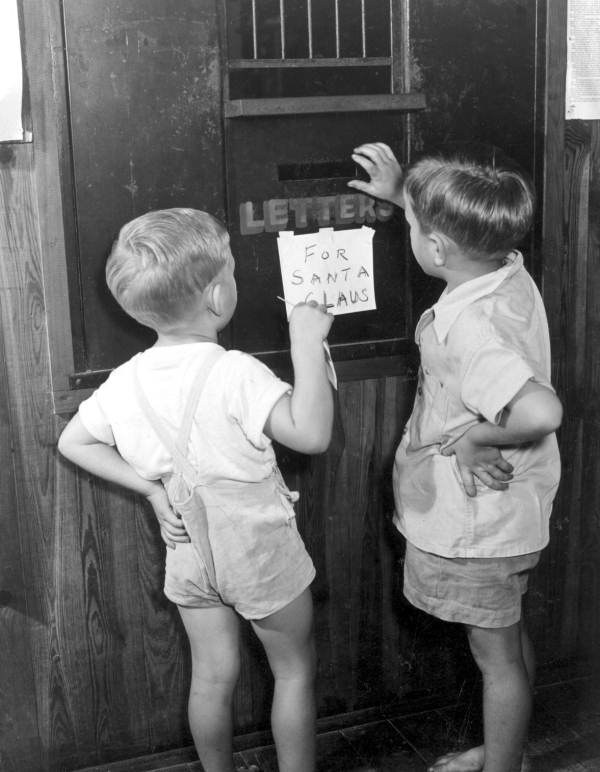
- A letter to Santa written together, then "mailed" to the North Pole
- A countdown calendar with one small activity per day, not a gift per day
- A cookie plate set out on Christmas Eve with a note
- A bedtime story about Santa's night, read in the same voice each year
One low-effort idea: let your child leave a Christmas voice message for the North Pole. Families can call Santa Claus for free and record a message together at christopherkringle.com.
Older kids can also email Santa Claus through christopherkringle.com. It takes five minutes and gives them something to look forward to.
Tweens (ages 8-11): contribution and ownership
By this age, many kids are already asking sharper questions, and the tradition that keeps magic alive is one where they get to be a producer, not just a recipient. Invite them to help plan a surprise for a younger sibling, choose a gift for a grandparent, or take on a "Santa's helper" job on Christmas Eve. The same rituals continue, but the child's role changes from audience to cast member.
Teens (ages 12+): legacy and leadership
Teens who have outgrown belief often stay engaged when they are trusted with the family's traditions. Let them lead a ritual: read the story to younger kids, run the cookie bake, or organize the lights drive.
The through-line is simple: match the tradition to the child's developmental stage, and let the ritual grow with them rather than replacing it.
Here's how the same rituals grow with each developmental stage.
| Age group | What magic looks like | Example traditions |
|---|---|---|
| Toddlers (ages 1-3) | Sameness over surprise | Countdown chain, single cookie plate, same bedtime story |
| School-age kids (ages 4-7) | Participation and anticipation | Letter to Santa, countdown calendar with one activity per day |
| Tweens (ages 8-11) | Contribution and ownership | Help plan a surprise, choose a gift, Santa's helper job |
| Teens (ages 12+) | Legacy and leadership | Read the story to younger kids, run the cookie bake |
Christmas Traditions for Older Kids: From Believing to Becoming Santa
Here's the turning point most parents fear. Somewhere around ages 8 to 11, kids start asking sharper questions. The instinct is to panic. Don't.
That shift does two things. It protects the magic for younger children, and it gives tweens a sense of importance. They're not losing the story.
A few ways to make the handoff smooth:
- Ask them to help plan a surprise for a sibling
- Let them choose a gift for a grandparent
- Give them a "Santa's helper" job on Christmas Eve
- Read the same Christmas stories together, but let them read to the younger kids
This is where generosity takes root. The child who gives becomes the child who understands the spirit of giving.
How to Bring Christmas Magic Back When the Wonder Fades
Some years, the magic just isn't there. Maybe a child stopped believing. Maybe the season got busy. Maybe you're the one who's tired.
The good news: wonder is rebuildable. You don't need to start over. You need one good moment.
Try this. Pick a single evening, put away the phones, and do one thing together:
- Bake something from scratch, even if it's messy
- Drive around to see the lights in pajamas
- Watch the same holiday movie you watched as a kid
- Write a letter to someone who needs cheering up
That's it. One evening. The point isn't to recreate a perfect holiday.
What most guides miss is that magic fades when the season becomes a checklist.
Honest Conversations: Answering Questions About Santa Without Losing the Spirit
When a child asks, "Is Santa real?", the worst answer is a rushed one. The best answer is a question back: "What do you think?" That buys you a moment.

The harder work is answering direct questions without undermining trust, and handling the moment a child discovers the truth without pressuring them to keep believing. Here is a developmentally appropriate approach.
Ages 3-6: wonder and reassurance
Keep the story warm and simple. Answer with wonder, not facts. If they ask how Santa gets in without a chimney, say something like, "That's one of the mysteries of Christmas night." The goal is not to deceive but to let imaginative play do its work. According to the American Psychological Association's guidance on imaginative play, pretend play supports creativity and emotional growth in young children, so protecting that space is developmentally sound.
Ages 7-9: curiosity and the spirit of giving
Ask what they've heard. Gently explain that Santa is a spirit of giving that lives in everyone. A workable script: "Santa is the name we give to the feeling of giving without wanting anything back. That feeling is real, and it lives in you too." This answers the question honestly without a hard reveal, and it gives the child a role in the story.
Ages 10+: honesty and invitation
Be honest. Then invite them to become Santa for someone else. A workable script: "The Santa story is a tradition families tell to remind us to be generous. You're old enough now to help keep that going for your younger cousin." This frames the truth as a graduation, not a loss.
When a child discovers the truth on their own
A common pattern is a child finding a gift receipt, a hidden present, or a search history. The instinct is to deny, but denial is what damages trust. Instead, acknowledge the discovery and reframe it: "You figured it out. That's a big step. The magic doesn't end here; it changes. Now you get to help create it for someone else." Then give them a concrete helper role so the conversation ends with agency rather than disappointment.
When a child wants to keep believing
Some kids suspect the truth and still want the story. That is normal, and it is not dishonest to let them keep it. Follow their lead: if they want to write a letter, write it; if they want to set out cookies, set them out. The story is theirs to keep as long as it serves them.
When a child is pressured to keep the secret
Older siblings sometimes feel burdened by being told to protect the secret for younger kids. Release that pressure.
If you need help with the tricky questions, the Christopher Kringle story offers magical answers to common Santa questions for kids at christopherkringle.com.
You don't have to choose between honesty and magic. You can have both. The spirit of giving doesn't disappear when the story changes. It just changes shape.
Low-Cost, Low-Effort Ways to Create Holiday Magic Together
You don't need a big budget to make the season feel special. In fact, the cheapest traditions are often the ones kids remember most.
Here are our favorite low-effort ideas:
- Free printables: Print a coloring book page and fill it in together
- A family movie night with popcorn and the same blanket every year
- A kindness jar: Each family member writes one act of kindness and drops it in
- A homemade ornament made from paper, salt dough, or a photo
- A Christmas Eve walk to look at the lights
Printable coloring book pages for younger kids are available to download and print for free at christopherkringle.com.
The point is connection, not cost. A handwritten note beats a store-bought gift almost every time.
Start a New Family Tradition With Christopher Kringle
The families who keep Christmas magic alive year after year share one habit: they tell the story together.
You don't have to buy everything at once.
If your kids are older and you worry the story will feel too young, start with the history.
The season moves fast. Pick one tradition this week and start it.
The magic doesn't live in the gifts under the tree.
Frequently Asked Questions
How do you keep Christmas magical for older kids?
Shift the role rather than ending the story. Once children are around 8 to 10, invite them to help create the magic for younger siblings: filling stockings, hiding clues, or planning a holiday surprise. Talk openly about Santa as the spirit of giving, and give them a real job in the family rituals. That responsibility keeps the holiday meaningful without pretending, and it gives older kids a reason to stay engaged in Christmas traditions for older kids well into their teens.
What age should you tell your kids that Santa isn't real?
There is no single right age. Most children start asking questions between 6 and 9, and the better approach is to follow the child rather than pick a date. When they ask, answer honestly in a way that matches their understanding, and frame Santa as the spirit of generosity that families keep alive together. If a child discovers the truth on their own, reassure them that the magic does not disappear; it simply changes shape as they grow.
How can families make Christmas more meaningful without spending a lot?
Focus on rituals rather than purchases. Bake something together, read a Christmas story each night, drive around to see lights, or write letters to Santa. One family might set aside a day to volunteer, another might make handmade gifts for grandparents. These low-cost traditions build anticipation and create memories, which is what children actually remember. The goal is shared time and the spirit of giving, not a bigger pile of presents under the tree.
How do I bring Christmas magic back if the holiday feels flat?
Start small and involve the whole family. Ask each person to name one tradition they miss, then pick one to revive this year. Add a new ritual, such as a countdown activity or a family game night with Christmas trivia. Christopher Kringle offers free games, trivia, downloadable music, and printable coloring pages at christopherkringle.com, which gives families a shared activity to look forward to. Bringing back one or two meaningful moments often restores the feeling more than a packed calendar.