 How-to
How Do You Start Small with Christmas Story Collections?
Last Updated: November 10, 2026
Quick Summary
Start small with Christmas story collections by choosing five books: one classic, one fresh title, one inclusive story, one funny book, and one pick for your oldest child. Match each book to your child's age and your realistic nightly reading time, then rotate two or three titles at a time so the collection stays fresh.
- Pick your reading window first: five minutes suits picture books, fifteen allows a short chapter book.
- Ages 3-5 do best with picture books of five to ten minutes heavy on rhythm and repetition.
- Keep two or three books out at a time and store the rest so favorites feel new again.
- Spend on books you will reread and borrow the rest from libraries, swaps, and secondhand shops.
- Anchor the tradition to a fixed moment, like Christmas Eve or every Sunday in December.
Table of Contents
- Why a Small Christmas Story Collection Beats a Big One
- A Step-by-Step Framework for Choosing Your First Stories
- How to Plan Collection Size and Budget Without Overspending
- Free and Low-Cost Ways to Grow Your Collection
- Building a Christmas Book Tradition Your Family Keeps
- Organizing and Storing a Growing Collection
- A Simple December Reading Schedule to Start This Week
- Start Your Family's First Story Collection with Christopher Kringle
- Frequently Asked Questions
Why a Small Christmas Story Collection Beats a Big One
Starting small with Christmas story collections can be a sensible approach for a family. A handful of well-chosen books gets read again and again. A shelf full of unread titles just collects dust.
Families who try both paths tend to find the small collection works better. Here is why.
A Christmas story collection is a curated set of books and tales a family returns to each December, chosen for meaning rather than volume. The key word is curated. Ten books you love beat fifty books you bought in a panic on December 20.
Big collections fail for boring reasons:
- Kids get overwhelmed and pick nothing
- Parents forget what is on the shelf
- Half the books never get opened
- Storage becomes a chore
Small collections win because every book earns its place. You know the stories. Your kids know them. The holiday season gets a rhythm instead of a pile.
Reading Rockets guide to reading aloud with children notes that repeated readings build vocabulary and comprehension. That is the quiet gift of a small collection. Repetition does the teaching.
So how do you build one without guessing? Below, we walk through a framework you can use this week.
A Step-by-Step Framework for Choosing Your First Stories
The best first stories match your child's age, your family's reading time, and a deliberate mix of old and new voices. Start with five books. That is enough for a full season, and it is the single most useful decision you will make this December.
Here is the framework we recommend, with concrete examples so you are not guessing in a bookstore aisle:
- Pick your reading window. How many minutes can you realistically read each night? Five? Fifteen? Be honest. A five-minute family reads picture books; a fifteen-minute family can carry a short chapter book across a week.
- Choose one classic. A story you remember from childhood. Think The Night Before Christmas, The Polar Express, or a illustrated A Christmas Carol for older kids. Classics give your family a shared language and a predictable rhythm.
- Choose one fresh title. Something published in the last few years. Browse the holiday shelf at your library or ask a children's librarian for one recent picture book. Fresh titles keep the collection from feeling like a museum.
- Choose one inclusive story. A perspective your family does not usually hear. Look for stories set in different countries, faith traditions, or family structures. The goal is not a lecture; it is a window.
- Choose one funny book. Laughter keeps kids coming back. A silly Santa story or a humorous animal tale earns its place because it gets reread.
- Choose one for the oldest child. Something with more bite, a short chapter book or a mystery, so the oldest reader does not feel like the collection is for the youngest.
That is five books, one season, zero guesswork. If you want a ready-made first pick, our children's picture book uses real history and photographs to tell the Santa story. It fits the framework above as a classic-and-fresh pick in one, and it pairs well with a free printable coloring page from christopherkringle.com for younger kids.
Match Stories to Your Child's Age and Reading Time
Age sets the ceiling. Time sets the floor. Use this as a starting map, not a rulebook:
- Ages 3-5: picture books, five to ten minutes, heavy on rhythm and repetition. Look for cumulative tales and sing-song text.
- Ages 6-8: early readers, ten to fifteen minutes, simple plots with a clear lesson. Short chapters help the child feel progress.
- Ages 9-12: short chapter books, fifteen to twenty minutes, room for mystery and history. This is where a classic like A Christmas Carol (abridged) fits.
A common mistake is buying up. Parents sometimes grab a chapter book for a six-year-old because it looks impressive, and the child can lose interest quickly. Match the book to the child in front of you, not the child you hope they will be by Christmas.
Balance Classics with Fresh and Inclusive Perspectives
Classics give your family a shared language. Fresh titles keep the collection from feeling like a museum. Aim for this split:
- Half classics your parents read to you
- Half newer stories from voices you have not read yet
Why bother? Because Christmas looks different in every home. Stories from many backgrounds can show kids that generosity takes many forms. A simple test: after reading, ask your child whose Christmas looked different from ours.
Common Sense Media guidance on choosing books by age is a practical starting point when you are unsure whether a title fits your child. And if you want a free activity to pair with any story, christopherkringle.com offers printable coloring book pages and free trivia games that extend the reading into play.
How to Plan Collection Size and Budget Without Overspending
Plan your collection size first, then let the budget follow. A family reading three nights a week needs fewer books than one reading every night.
Here is a simple planning table:
| Reading Nights per Week | Books for One Season | Plan |
|---|---|---|
| 2-3 nights | 4-5 books | Rotate two favorites weekly |
| 4-5 nights | 6-7 books | Add one new title each December |
| Daily | 8-10 books | Mix short and long reads |
The table is a starting point, not a rule. The real mechanism is rotation: keep two or three books out at a time and store the rest. A book that disappears for a week comes back feeling new.
On budget, the rule is simple: spend on books you will reread, borrow the rest. Library copies and secondhand finds cost little and free up room for one or two keepers.
Watch out: the holiday shopping rush can push parents into bulk buys. Buy one book at a time and see what your kids actually reach for. A book your child asks for again is worth more than a boxed set they ignore.
You can also grow the collection for free. At christopherkringle.com, everything is free for parents: printable coloring book pages, free trivia games, downloadable music, and YouTube videos. Pair a library book with a free printable activity and you have a full evening without spending anything.
Free and Low-Cost Ways to Grow Your Collection
You can grow a Christmas story collection without spending much at all. Libraries, swaps, and free downloads do most of the work.
Try these in order:
- Library holds. Reserve holiday titles in November before the shelves empty.
- Book swaps. Trade with other families in your neighborhood or school.
- Secondhand shops. Classic Christmas books turn up cheap all year.
- Free printables and downloads. Pair a story with an activity page for younger kids.
At Christopher Kringle, everything is free for parents. You can grab free Christmas printables like Santa wish lists, Nice List certificates, and thank-you letters. Pair them with a story for a full evening of reading and doing.
Building a Christmas Book Tradition Your Family Keeps
A Christmas book tradition is a repeated ritual, not a single read. The repetition is what makes it stick.
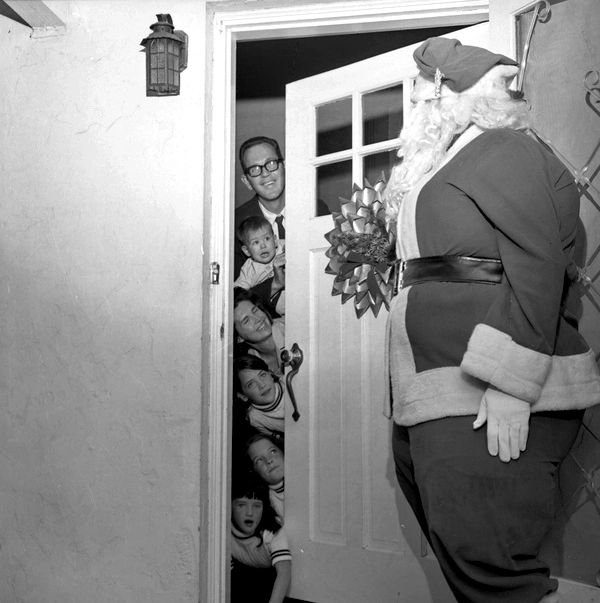
Pick a fixed moment. Christmas Eve works for many families. Others read every Sunday in December. The exact day matters less than the consistency.
Then add one small ritual:
- The same blanket every year
- A candle or fairy lights
- One photo of the reading moment
- A short chat about the story afterward
Kids remember rituals longer than plots. Our Parents & Families section has more Christmas parenting tips for meaningful holiday conversations and Santa secrets.
Organizing and Storing a Growing Collection
Keep your growing collection visible and seasonal. A shelf you can see gets used. A box in the attic gets forgotten.
Use these habits:
- Store holiday books together, separate from everyday reading
- Keep a simple list of titles so you do not buy doubles
- Put the current season's picks face-out at kid height
- Retire books your kids have outgrown, and pass them on
A basket works as well as a shelf. The point is access, not furniture.
A Simple December Reading Schedule to Start This Week
A December reading schedule turns good intentions into actual reading. Here is one you can start this week.
- Week 1: Read your classic. Talk about who first told it to you.
- Week 2: Read the fresh title. Ask what felt new.
- Week 3: Read the inclusive story. Ask whose Christmas looks different from yours.
- Week 4: Read the funny book, then the oldest child's pick.
- Christmas Eve: Reread the family favorite.
Sing-along videos give you an easy activity to slot between reading nights. Our sing-along songs page has Christmas music videos made for family gatherings.
For the deeper case on why meaning beats volume, read how storytelling shapes kids at Christmas.
Start Your Family's First Story Collection with Christopher Kringle
Building a Christmas story collection does not take a big shelf or a big budget. It takes five good books, a fixed reading moment, and the willingness to reread.
That is the whole secret. Small, chosen, repeated.
At Christopher Kringle, we built a place where families can start without spending a thing. Parents can call Santa, email Santa, and play free trivia games on the site. You can also download music, watch YouTube videos, and print coloring pages for younger kids. Our nine-book saga weaves real history and hidden societies into the Santa story.
Start with one story this week. Get started with Christopher Kringle and give your family a tradition that returns every December.
Frequently Asked Questions
How do I start a Christmas story tradition with children?
Begin with three to five books rather than a full shelf. Pick one classic, one picture book for younger kids, and one longer read-aloud for older children. Set a fixed time, such as bedtime for the first two weeks of December, and keep sessions short. A Christmas book tradition grows from repetition, not volume, so rereading the same favourites matters more than adding new titles. Christopher Kringle offers nine books plus free games and music at christopherkringle.com to extend the tradition.
How long should a Christmas story be for young children?
For ages three to five, aim for picture books that take five to ten minutes to read aloud. Children aged six to eight can handle short stories of ten to fifteen minutes. Ages nine to twelve often enjoy chapter books read in daily instalments of fifteen to twenty minutes. Check the estimated reading time before you buy, and stop while your child is still engaged rather than pushing to the end of a chapter.
Where can I find free short Christmas stories to read aloud?
Public libraries lend holiday collections at no cost, and many run seasonal story hours. Secondhand shops and family book swaps keep costs low. Christopher Kringle gives parents free access to online stories, narrated stories, trivia games, downloadable music, YouTube videos, and printable coloring pages for younger kids at christopherkringle.com. Combining free digital stories with a few borrowed library books lets you test what your family loves before spending money.
How can I choose Christmas stories that are right for my child's age?
Read the first page aloud before committing. For younger children, look for short sentences, large illustrations, and a clear arc. For older kids, choose stories with chapters, humour, and richer historical detail. Mix familiar classics with stories told from varied perspectives so children of all ages find something that reflects them. Keep a short book list of what worked and what fell flat, then use it to guide next year's choices.